
Client story · Silicon Valley, CA
Court & Current Estate
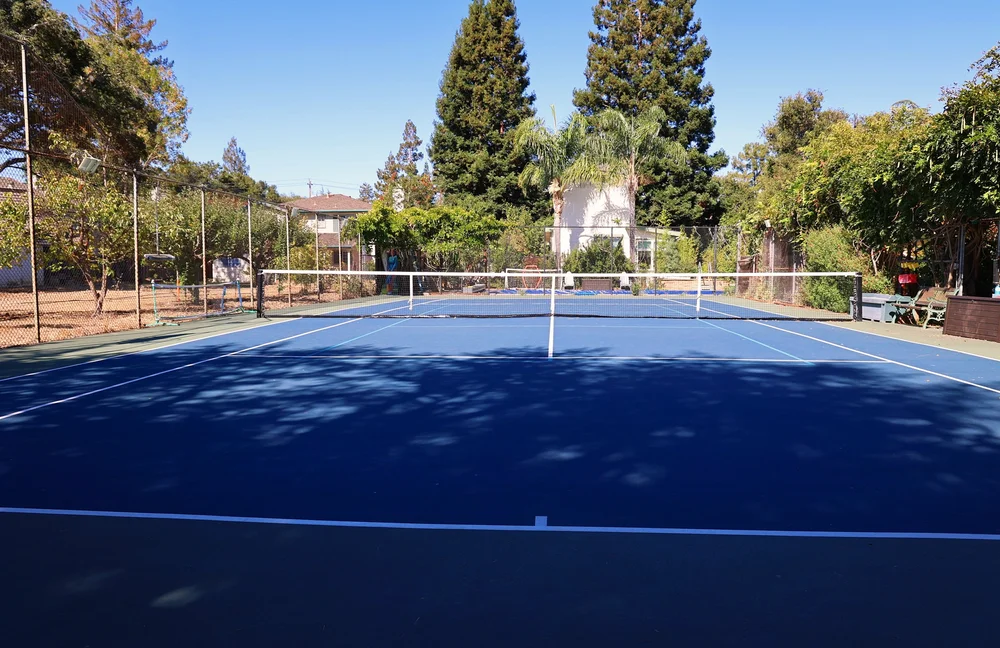
Tennis court, pool, outdoor kitchen — an outdoor-living estate rebuilt to run entirely on power it makes itself.
At a glance
Four systems, engineered as one
Energy Integration
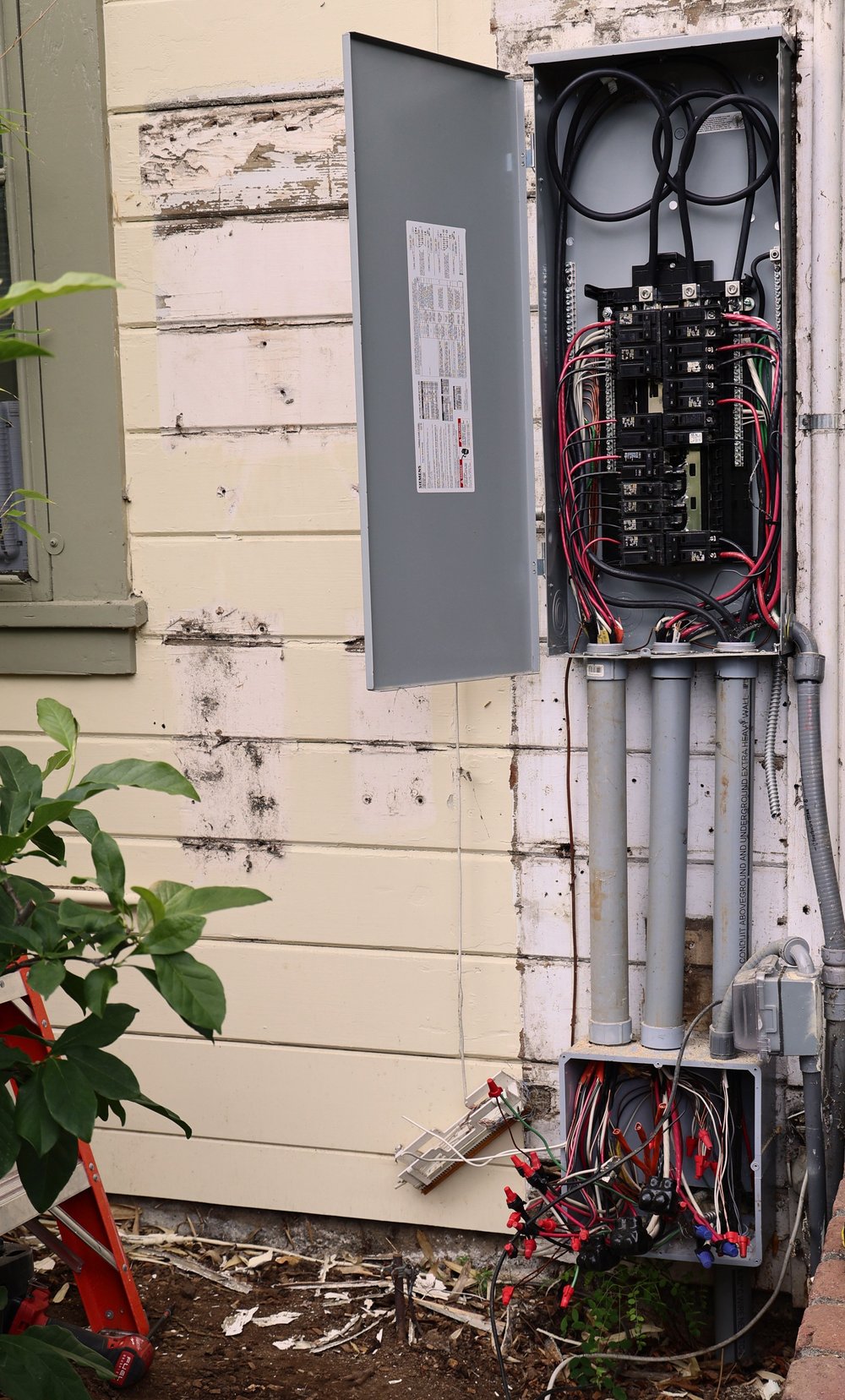
One centralized smart panel running the entire multi-structure estate — instead of a sprawl of sub-panels across the property.
Energy Production
24kW solar array (52 new high-output panels) replacing the failing legacy system, on an inverter platform built to scale to 40kW.
Energy Storage
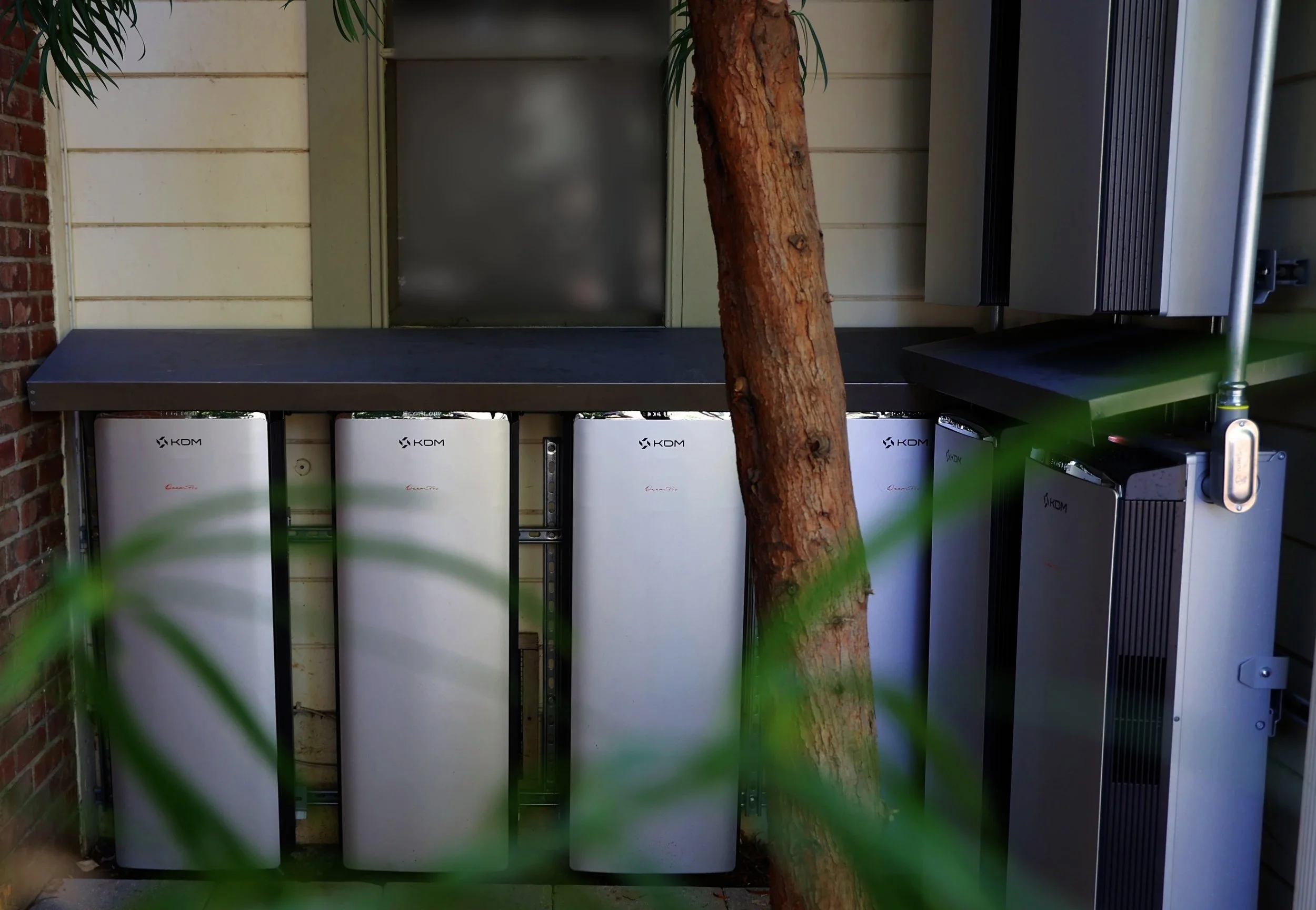
80kWh across eight batteries — the maximum a single inverter supports — housed in a shielded, low-visibility enclosure.
Energy Control
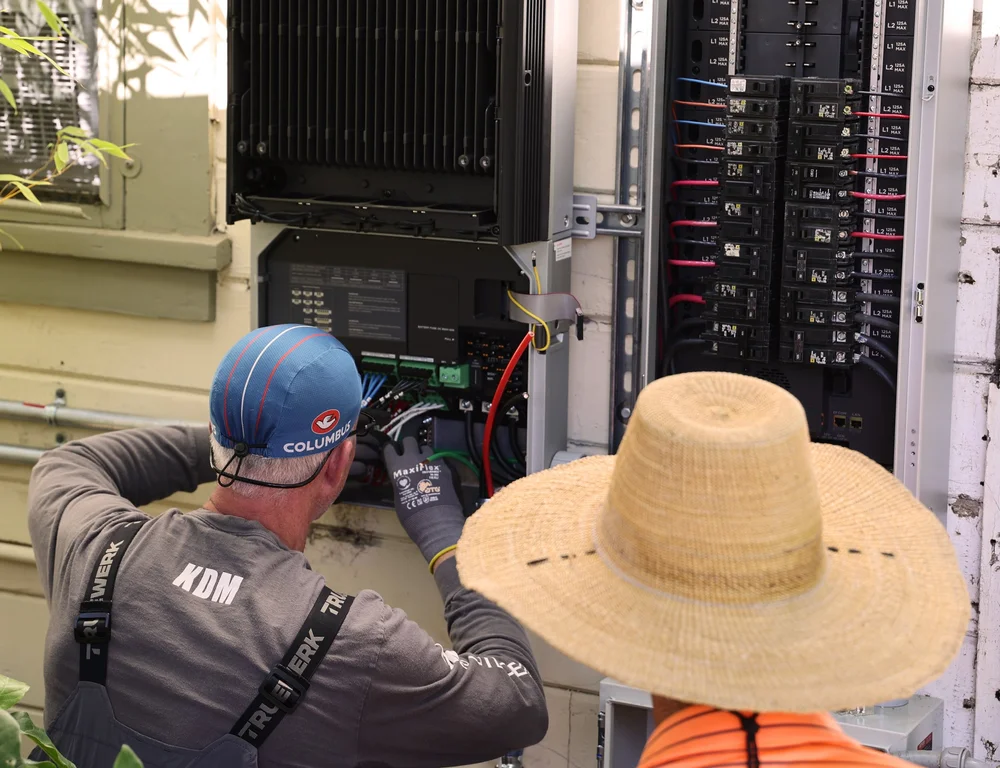
A smart panel with a built-in utility disconnect, automatic outage isolation, and real-time, per-circuit control.
KDM Energy rebuilt the solar and storage system at Court & Current Estate, a Silicon Valley property built around outdoor living — a tennis court, a pool with an electric heat pump, a full outdoor kitchen, a main house, and a detached ADU. The project replaced a failing 20-year-old, 7kW array with 52 high-output panels producing 24kW, paired with eight EcoFlow batteries totaling 80kWh — the maximum a single inverter supports. An EcoFlow smart panel runs the entire estate through one intelligently managed service, with a Tesla EV charger isolated on its own line and per-circuit control across 40 breakers. When the grid goes down, the system disconnects from PG&E automatically and runs on solar and battery. The four-day installation nearly quadrupled the property’s solar capacity and delivered backup power for the first time, on an inverter platform built to scale to 40kW.
The Impact
Rebuilt today, room for tomorrow
Nearly 4x the solar, and real storage for the first time
Legacy system vs. June 2026 install
Source: KDM Energy project engineering, 2026. Figures approximate.
The inverter platform carries 16kW of unused solar capacity — two-thirds more production available without touching the electrical architecture. If the property’s loads grow, or if a second inverter ever becomes worth its cost, the foundation is already in place.
The Brief
It started as a repair
This project didn’t start as an upgrade. It started as a repair.
The homeowner had a solar system pushing twenty years old — about 7kW of production from panels that, by today’s standards, deliver roughly a third of what a modern panel produces from the same roof space. The system still worked, but the inverter was failing, the way inverters do after two decades of service. That alone was reason enough to call.
What made the project bigger wasn’t the failure — it was the rate. The homeowner was on a legacy net-metering agreement from the original installation: a true one-to-one buyback, where every kilowatt-hour sent to the grid was credited at the same rate PG&E would have charged for it. It’s about as good as solar economics get, and it no longer exists for new systems. He had two to three years left before that rate reverted to PG&E’s standard terms — not a small step down, but a full reset.
That reframed the choice entirely. Patch the failing inverter and quietly ride out the remaining years — or rebuild the system to consume everything it produces on-site, exporting nothing. No export means PG&E never sees a change in the production profile, and no reason to revisit the account before the rate would have expired anyway. Once the decision was framed that way, the brief wrote itself:
“What’s the maximum kilowatt hours we can do on batteries? What’s the solar size we can do to match that?”
The Constraint
Build to the hardware ceiling
A single inverter on this platform tops out at 80kWh of connected battery storage — eight units — and supports up to 40kW of solar. That ceiling became the design target: build to the maximum a single inverter can carry, rather than chasing a consumption estimate.
It’s a generous number, but not an infinite one. Between the pool and its electric heat pump, the tennis court, the outdoor kitchen, the detached ADU, and a Tesla EV charger, the honest estimate is that the property can draw well over 100kWh on a heavy day — more than the battery bank alone will cover. The system isn’t designed to make the property invisible to the grid every single day. It’s designed to retire the failing legacy equipment, maximize self-consumption, and deliver real resilience during an outage — without the cost and complexity of a second inverter chasing a number that daily use would outpace anyway.
The design landed at 24kW of solar and 80kWh of storage: substantial headroom over the old 7kW system, and the practical ceiling for a single-inverter build.
The Engineering
Decisions with reasons
One panel for an entire estate
This property isn’t one building — and most of its life happens outside of any building at all. A main house and a detached ADU anchor a lot where a tennis court, a pool warmed by an electric heat pump, and a full outdoor kitchen all draw power independently. The instinct on a property like this is to give every structure its own sub-panel. Instead, everything routes through a single, intelligently managed EcoFlow smart panel, with the Tesla EV charger isolated onto its own line so it never competes with the rest of the property for headroom. The smart panel’s real-time load mapping is what makes that possible: it can see exactly where power is going at any moment, so the system never has to guess whether it’s about to overrun the service.
The pool is a case study in itself. Heating it electrically — with a heat pump instead of a gas heater — turns the property’s single largest comfort load into something the solar array can carry directly. On a sunny afternoon, the pool is warmed by the same roof that’s charging the batteries, and the gas meter never moves.
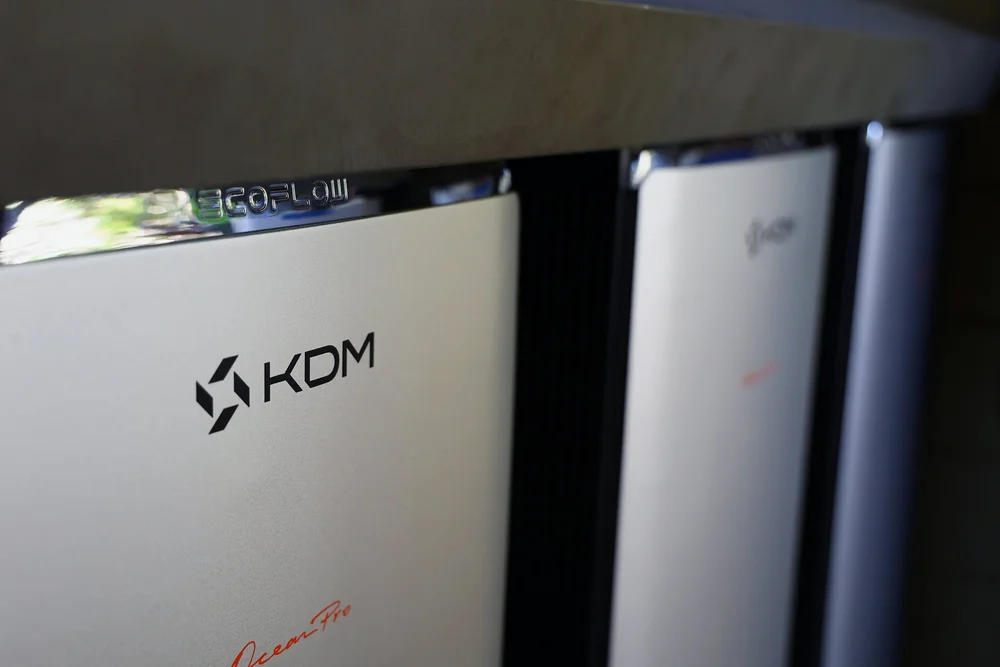
The battery enclosure got the same level of consideration. The original plan put it against an east-facing garage wall — full sun most of the morning, plus a new conduit run to reach it. The team found a better answer: a north-facing cove, shielded on three sides by the structure itself, close to existing conduit pathways, and screened from the street by trees. Eight batteries now sit in a compact footprint — four side by side, plus a two-by-two stack on the adjacent wall — protected from the elements and out of view.
One smart panel, five load centers
Court & Current Estate
Source: KDM Energy project engineering, 2026.
Nearly quadrupling capacity, in four days
The original 36 panels came down and 52 new 460-watt panels went up — reusing existing roof mounts where they still made sense, adding new racking where the array expanded, and running new, larger conduit throughout to carry the added power back to the inverter. The swap took four days start to finish: one day to strip the old array, two days to complete the racking, and one day to set the new panels, with the crew scaling up on the final day to close it out. The new inverter is rated for up to 40kW of solar; this installation uses 24kW of that, leaving real room to grow.
Eighty kilowatt-hours, out of sight
Eight battery units — 80kWh total — is the maximum a single inverter on this platform supports, and a significant leap from a legacy system that had no battery backup at all. Housed in the shielded north-facing cove, the bank is dense but orderly: four units in a row, four more stacked two-by-two on the neighboring wall, close enough together to keep the wiring clean and the footprint small on a property where every wall has a view worth protecting.
A panel that thinks, and lets you think too
The smart panel does double duty as the property’s utility disconnect — no separate meter-collar disconnect required, because the isolation switch is built into the panel itself. When the grid goes down, the system recognizes it immediately, disconnects the property from PG&E, and runs entirely on solar and battery until utility service returns. Reconnection isn’t instant by design: the system confirms the incoming power is stable and re-syncs to the grid’s own frequency before switching back over, so the property isn’t bounced on and off while utility power settles.
Day to day, the panel gives the homeowner a level of control the old system never could: 40 individually switchable breakers, each visible in real time from an in-home touchscreen or app — what the ADU is drawing, what the pool system is pulling, load by load. And unlike a purely automatic system that sheds load only on preset battery thresholds, this one can be overridden in the moment — shut off a load that isn’t needed right now, or turn one back on because the oven has to run for dinner, without waiting for an automated hierarchy to catch up.
The Outcome
What the homeowner got
- Nearly 4x the solar capacityReplacing a failing 20-year-old system with 52 new high-output panels.
- Real backup power for the first timeThe legacy system had no storage at all; this one carries 80kWh and isolates automatically when the grid goes down.
- One estate, one panelA property with a main house, a detached ADU, and an entire outdoor-living program runs through a single, intelligently managed service.
- Total visibilityEvery circuit’s draw is visible and individually controllable in real time, from anywhere in the house.
In Co-Founder Josh’s Words
From the engineer who built it
“A 20,000-square-foot property isn’t just a bigger 4,000-square-foot house. It doesn’t scale — it’s a different deal. That’s why we’re leveraging smart-panel technology to run the whole property off one service, instead of a house full of separate sub-panels.”
Josh Parman, Co-Founder, KDM EnergyPartners on this project
Built with
Own your energy. Own your life.
Considering something similar for your home?
KDM Energy designs whole-home energy systems for estates that are built to last — delivering complete autonomy, on your terms.