
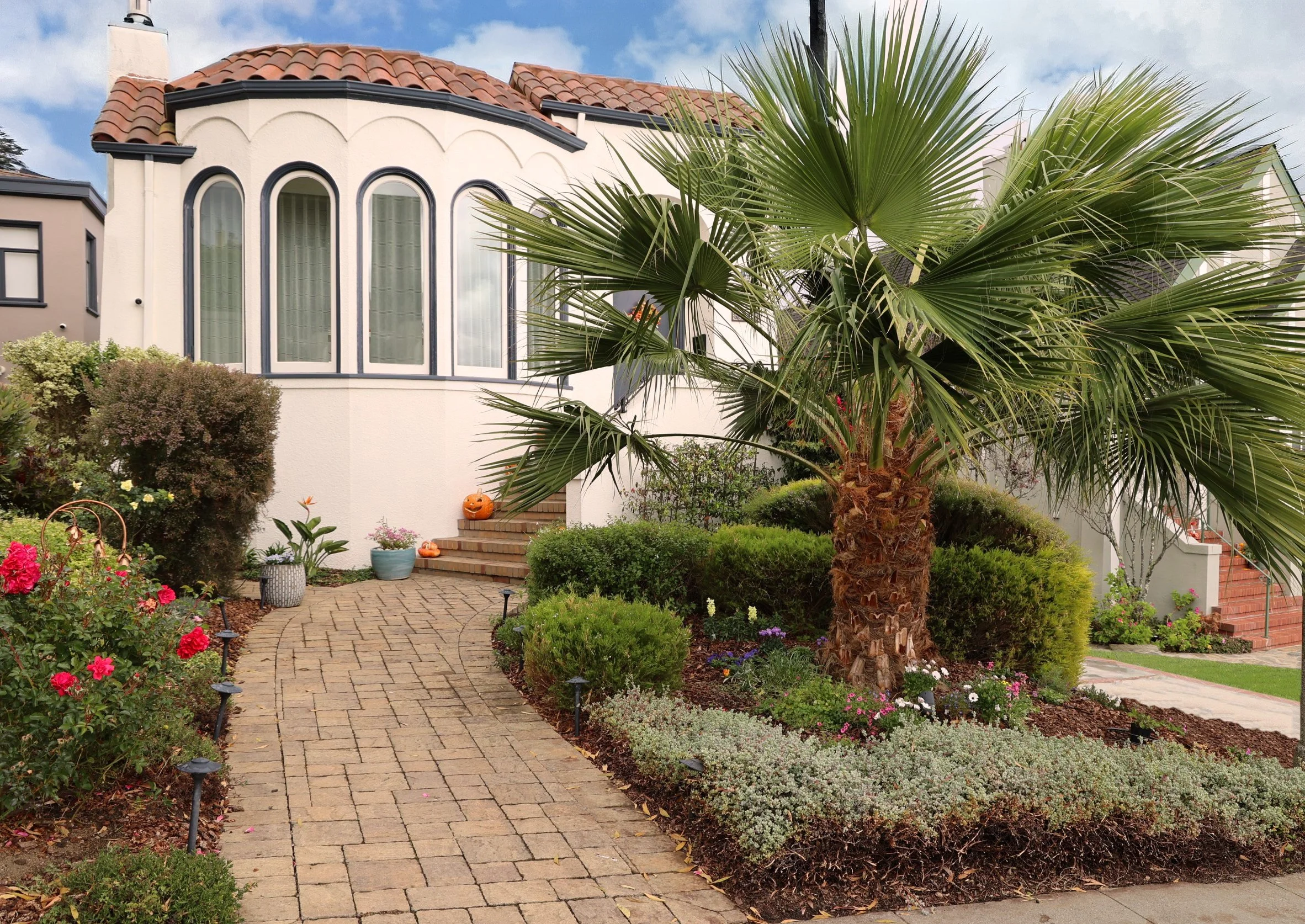
Client story · San Francisco, CA
The Reserve House
A compact San Francisco home with heavy electrical loads, a foggy roof, and a 100-amp service. Rebuilt around 30kWh of stored power, so it fills up on cheap overnight energy and spends it through the evening peak, without a service upgrade.
At a glance
Four systems, one 100-amp service
Energy Integration
Two EcoFlow smart panels, one at the meter and one in the mudroom, tie the legacy solar, the batteries, and the EV charger into a single system.
Energy Production
The home’s existing 2.3kW Enphase array, kept and re-routed so its surplus charges the batteries before anything goes back to the grid.
Energy Storage
30kWh across three EcoFlow batteries on the shaded north side, charged overnight at off-peak rates and expandable to 80kWh on the same platform.
Energy Control
Load management that holds the whole house under its 100-amp limit, shedding non-essential loads before the service is ever overrun.
KDM Energy re-engineered the electrical system at The Reserve House, a single-family home on a compact San Francisco lot where a new Tesla EV charger had pushed an older 100-amp service past its comfort zone and breakers had started tripping. The roof can’t support much solar, so KDM Energy built the system around storage instead. A new meter box, an EcoFlow smart panel, and an EcoFlow inverter manage every load to stay within 100 amps, with the home’s existing 2.3kW Enphase array tied in. Three EcoFlow batteries on the shaded north side now hold 30kWh, charged overnight at off-peak rates and spent through PG&E’s 4–9 PM peak window. A second EcoFlow smart panel, an interior subpanel in the mudroom off the south side of the house, puts every circuit in the same app. The equipment sits behind a custom-fabricated panel door or out of sight on the north side. The original installation took four days on site, and the platform can grow to 80kWh.
The Impact
Thirty kilowatt-hours, spent every evening
Storage grew from zero to 30kWh on the same 100-amp service
Battery storage, kWh · San Francisco home, 2026
Source: KDM Energy project engineering, 2026.
This house can’t lean on its roof. The existing array makes about 2.3kW at its best, so the batteries are the main supply and the solar is a top-up. The daily pattern is simple. At midnight, when PG&E’s rates are lowest, the system charges the bank as fast as it can to roughly 95 percent and holds it there. Solar tops it off through the day. At 4 PM, as rates climb, the house switches to battery power and its draw from the grid drops away. During the most expensive hours of the day, the house buys almost nothing from the grid.
On the original 20kWh bank, evenings drew the batteries down to about 30%
Battery state of charge, one day in 2026 · before the third battery
after midnight
run the house
Source: homeowners’ EcoFlow system data, 2026. One day; figures approximate.
That first stretch of data showed the bank finishing most evenings near 30 percent, which left little reserve if the power went out overnight. The third battery adds 10kWh of headroom. If the evening draw stays the same, the 30kWh bank ends the day with roughly half its charge instead of about 30 percent.
The Brief
It started with a tripping breaker
This project didn’t start with solar or batteries. It started with breakers.
The homeowners had recently added a Tesla charger for their EV, and breakers around the house had started tripping, rarely the same one twice. The home runs on a 100-amp service, common for San Francisco houses of its era, and their electrician’s read was that the panel was no longer sized for what the house was being asked to do.
They came to KDM Energy through a referral, already inclined to do it properly. The conventional fix is a service upgrade to 150 or 200 amps: a bigger panel, a bigger meter, and a utility process that runs on its own schedule. KDM Energy’s site visit in late April pointed somewhere else. The house didn’t need more amps. It needed a panel smart enough to manage the ones it already had.
With that as the frame, the scope came together around three goals. Bring the house comfortably within its existing service. Add enough storage to do the work the roof can’t, so the house could ride through rate peaks and outages. And do it on a stucco façade and a narrow city lot without the house ending up looking like an equipment room.
“How can we clean all this up and hide all this stuff without doing too much major reconstruction?”
The Constraint
A foggy roof and a narrow lot
Solar was the obvious first question, and the house had already answered it. The existing Enphase system produces about 2.3kW at its best, from a small south-facing roof plane in a part of the city where the marine layer rolls in most afternoons. The homeowners had asked a solar company about expanding it and been told it wasn’t worth doing. KDM Energy ran the same numbers and agreed. There was no viable roof area for more panels, and swapping in newer, higher-output panels would gain perhaps half a kilowatt. Keeping the existing array clean and maintained is the better investment.
That changed what the batteries were for. On a sunny Peninsula estate, storage is mostly about banking surplus solar. Here, storage became the main lever. The batteries do most of their work as a time shift: buy power when it’s cheapest, use it when it’s most expensive. The solar contributes what it can, and none of it is wasted.
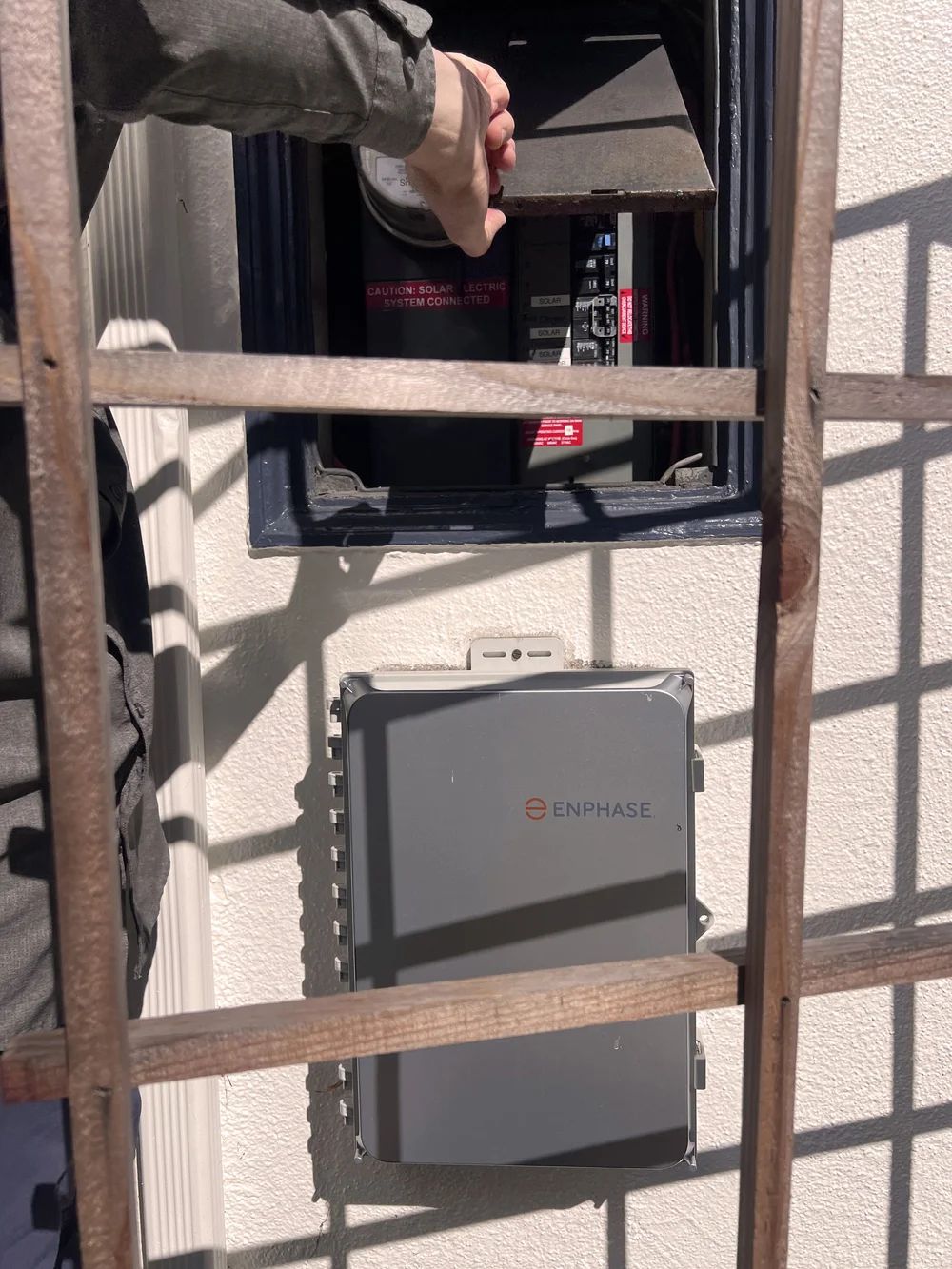
The lot was the other constraint. Side yards on a San Francisco parcel are measured in feet. The existing panel sat in a small recessed niche in the stucco, original to the house, behind a little wood door, with the Enphase equipment mounted on the wall beside it. Everything new had to fit the existing footprint or disappear entirely.
The design started at 20kWh. The home heats with gas and runs no air conditioning, so its biggest electrical loads are the kitchen, the dryer, and the EV, all of which lean on the evening. With little solar to refill the bank during the day, KDM Energy sized for the evening rather than the roof, and left room to add more. It was added: a third battery now brings the bank to 30kWh.
The Engineering
Decisions with reasons
Two panels that know what’s plugged into them
The new EcoFlow smart panel went where the old panel was, behind a new meter box. Every breaker in an EcoFlow panel is assigned a role: the double breaker carrying the Enphase array is designated as legacy solar, and the EV charger is its own monitored load. Because the panel, inverter, and batteries are one system, the batteries recognize the Enphase input as production. When the array makes more than the house is using, the surplus goes into the batteries instead of straight back to the grid.
A second EcoFlow smart panel followed. It replaces the interior subpanel in the mudroom off the south side of the house, the one where the arc-fault breakers had been tripping, and brings the household circuits into the same system. Both panels report to one app, so the homeowners see every circuit in one place.
KDM Energy considered staying in the Enphase family and pairing it with a third-party smart panel. That would have meant two systems that don’t fully share what’s connected where, and a longer, fussier commissioning. Keeping panel, inverter, and storage in one ecosystem avoided both. On site, the system registered in the installer app, ran its own updates, and came online with no pre-setup.
Two smart panels, one system
The Reserve House
Source: KDM Energy project engineering, 2026.
Thirty kilowatt-hours on the shady side
With no room in the side yards, KDM Energy ran power and communications underneath the house to the north wall, where the inverter and the batteries now sit. The north side was the better spot anyway: out of direct sun, which keeps the batteries cooler, and out of view from the street. The bank started as two batteries and is now three, 30kWh in all, on the same wall.
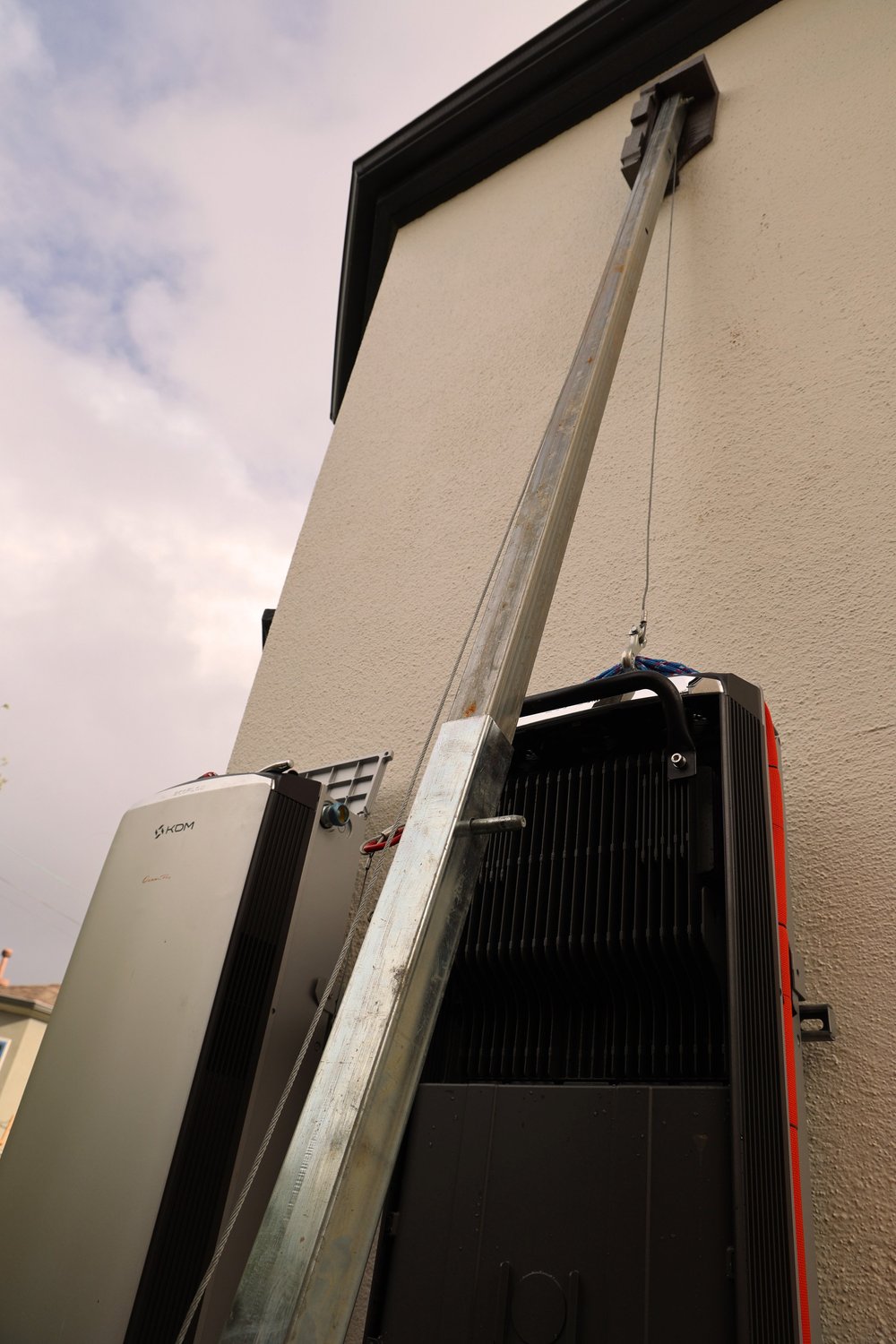
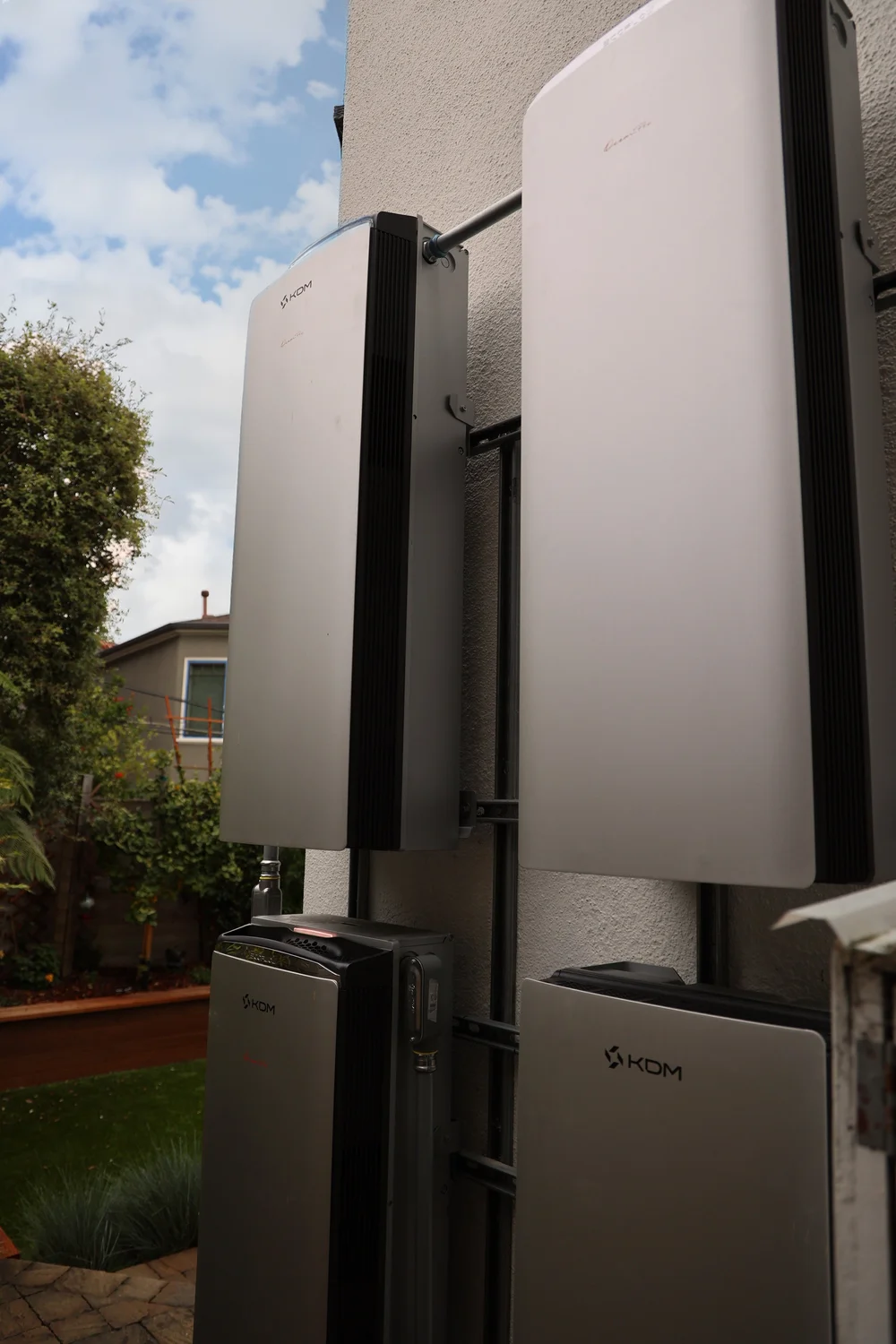
The bank charges from surplus solar when there is any, and from the grid after midnight at PG&E’s off-peak rate. The platform supports up to 80kWh, so there’s still room to add more. A storm mode holds the batteries at full reserve when severe weather is forecast, so an outage during a storm doesn’t find them drained from the evening before.
Living within 100 amps
The smart panel watches total draw in real time and never lets the house pull more than its 100-amp service is rated for. Loads can be ranked essential or non-essential. If the stove, oven, dryer, and EV charger all run at once and the house approaches its ceiling, the panel drops a non-essential load, such as the EV charger, rather than overrunning the service. The same breaker-level control lets the charger be scheduled off during peak hours.
This is why the house won’t need a service upgrade even with a second EV charger or a future heat-pump mini-split. The ceiling stays where it is, and the panel manages to it. KDM Energy first replaced the arc-fault breakers in the interior subpanel, the source of the random trips that started the project, and later replaced the subpanel itself with the second smart panel.
Hidden in plain sight
The old recessed niche got a second life. KDM Energy fitted the smart panel, the Enphase equipment, the home’s network modem, and a new outlet inside it, then closed it with a custom-fabricated panel door that sits flush with the stucco. The door was made to order back east with about six weeks of lead time, and the stucco around it was patched and repainted to match. From the street, there’s nothing to see.
One lesson came out of the install. The inverter on the north wall couldn’t hold a Wi-Fi connection, even with the home’s access point in the next room. The old stucco, likely thick and backed with wire mesh, blocked the signal. A hardwired network line fixed it on the spot, and KDM Energy now runs a network cable to every unit on every project, new builds especially, whether or not it ends up being used.
The original installation took four days on site across roughly three months, with the calendar set by the door’s fabrication rather than the electrical work. KDM Energy handled the full scope in-house, from the meter box and panel to the battery runs and network, with no outside electrical subcontractors.
The Outcome
What the homeowners got
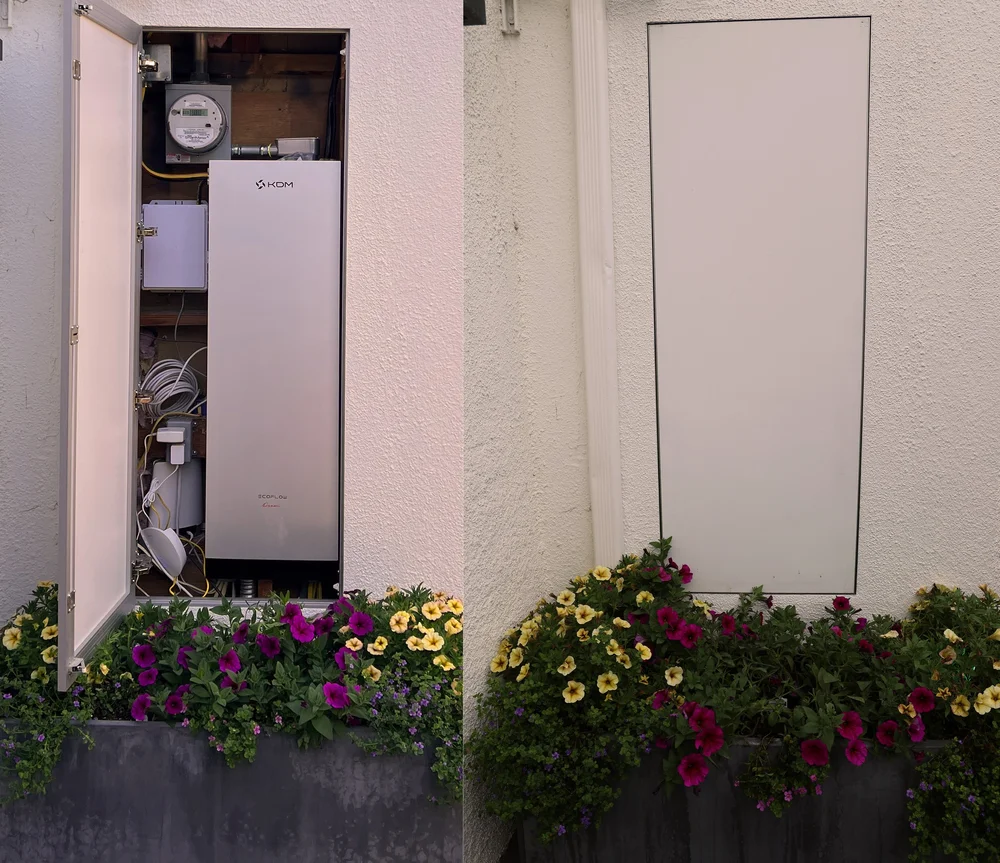
- No service upgradeEV charging, a full set of heavy appliances, and 30kWh of storage on the same 100-amp service, managed so it’s never overrun.
- Storage that does the workA 30kWh bank charged overnight at off-peak rates and topped up by the existing solar, then spent through PG&E’s 4–9 PM window.
- Reserve for outagesThe third battery adds headroom, so a normal evening no longer takes the bank down to its floor.
- Every circuit in one appTwo smart panels, one at the meter and one in the mudroom, report to the same system.
- A clean façadePanel, solar equipment, and network gear sit behind a flush custom door; the batteries are out of sight on the north side.
- Room to growThe platform supports up to 80kWh, and the panel can take a second EV charger without touching the service.
In Co-Founder Josh’s Words
From the engineer who built it
“Even though they only have 100-amp service, they could add another EV charger and not be concerned about overrunning the system. The smart panel makes sure the house never tries to pull more than 100 amps from the service.”
Josh Parman, Co-Founder, KDM EnergyPartners on this project
Built with
Own your energy. Own your life.
Considering something similar for your home?
KDM Energy designs whole-home energy systems for estates that are built to last — delivering complete autonomy, on your terms.